
Buy Longamox 100ml Online: The Definitive Veterinary Guide to Long-Acting Amoxicillin Trihydrate, Beta-Lactam Cell Wall Inhibition, and Broad-Spectrum Infection Control
In livestock production and competitive companion animal care, systemic bacterial infections present a constant threat to animal health, performance, and operational efficiency. Pathogens causing acute respiratory diseases (such as pasteurellosis or shipping fever), severe skin and soft tissue wounds, mastitis, and urinary tract infections can rapidly cause systemic fever and clinical decline if left unchecked.
While daily antibiotic therapies are effective, they require frequent animal handling and repeated injections. This causes significant stress, increases the risk of muscle damage at the injection site, and risks poor compliance if a dose is missed.
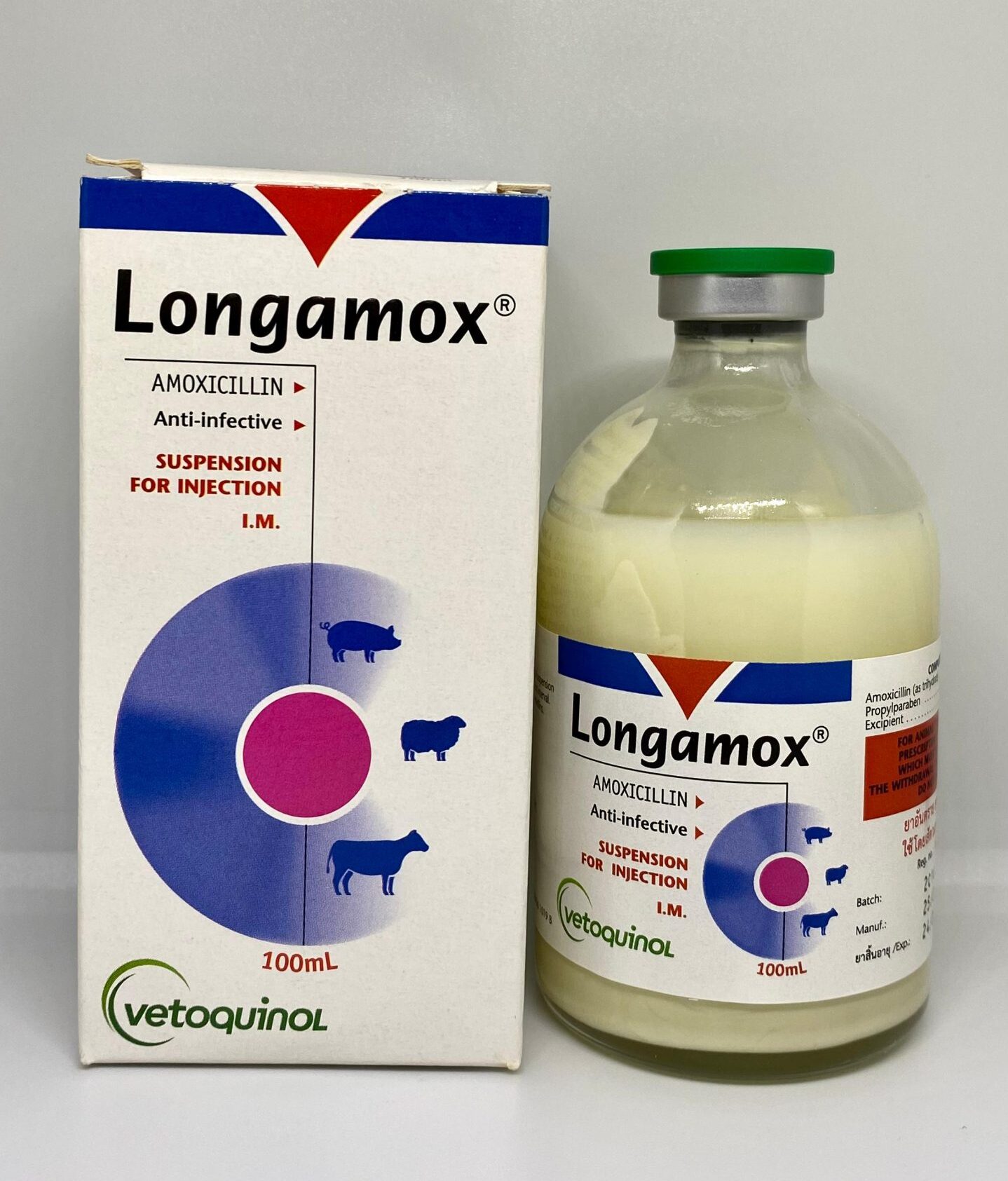
To solve these clinical challenges, veterinarians rely on long-acting, broad-spectrum antibiotic therapies. Longamox 100ml (containing Amoxicillin Trihydrate 15%) is a premier veterinary antibiotic. Formulated as a sterile, long-acting injectable suspension, Longamox slowly releases therapeutic concentrations of amoxicillin into the bloodstream. This slow-release design provides up to 48 hours of continuous, broad-spectrum bactericidal activity from a single intramuscular dose.
This reference guide details the molecular pharmacology, target animal applications, precise dosing tables, and safety guidelines for Longamox 100ml.
1. Molecular Biology and Clinical Pharmacology
Amoxicillin is a semi-synthetic, broad-spectrum beta-lactam penicillin. It is active against a wide range of Gram-positive and Gram-negative bacteria.
                      [Longamox 100ml Administered]
                                    |
                    [Deep Intramuscular Depot Forms]
                                    |
                [Slow Absorption of Amoxicillin Trihydrate]
                                    |
              [Continuous Therapeutic Blood Levels for 48 hrs]
                                    |
              =============================================
             |                                             |
             v (Gram-Positive Pathogens)                   v (Gram-Negative Pathogens)
     [Staphylococci, Streptococci, Clostridia]     [E. coli, Pasteurella, Salmonella]
             |                                             |
              =======================> <===================
                                     |
                                     v
                  [Binds to Penicillin-Binding Proteins]
                                     |
                 [Inhibits Peptidoglycan Transpeptidation]
                                     |
                 [Weakens Bacterial Cell Wall Synthesis]
                                     |
                    [Osmotic Lysis & Bacterial Death]
Mechanism of Action: Disruption of Bacterial Cell Walls
Like all beta-lactams, amoxicillin is a bactericidal antibiotic that targets actively multiplying bacteria. It works by disrupting the structural integrity of the bacterial cell wall:
PBP Binding: Once in the tissues, amoxicillin binds to specific enzymes called Penicillin-Binding Proteins (PBPs) located on the inner bacterial cell membrane.
Inhibiting Peptidoglycan Synthesis: PBPs are responsible for building and cross-linking peptidoglycan, the tough structural polymer that gives the bacterial cell wall its strength. By blocking these proteins, amoxicillin halts cell wall synthesis.
Osmotic Lysis: The weakened, incomplete cell wall cannot withstand the high internal osmotic pressure of the bacterium. Water flows into the cell, causing the bacterium to swell, burst, and die (osmotic lysis).
The Long-Acting Suspension Advantage
Longamox is formulated with Amoxicillin Trihydrate suspended in a specialized oily vehicle. When injected deep into muscle tissue, it forms a localized depot. The oily carrier slows down the dissolution of the amoxicillin crystals, releasing free amoxicillin gradually into the bloodstream.
This sustained-release design maintains therapeutic drug levels above the Minimum Inhibitory Concentration (MIC) of target pathogens for up to 48 hours, allowing for convenient, less frequent dosing schedules.
2. Spectrum of Activity & Target Pathogens
Longamox 100ml provides broad-spectrum bactericidal activity against several clinically important pathogens:
Gram-Positive Organisms: Streptococcus species, non-penicillinase-producing Staphylococcus species, Clostridium species, and Corynebacterium species.
Gram-Negative Organisms: Pasteurella multocida, Mannheimia haemolytica (the primary causes of shipping fever/pneumonia), Escherichia coli, Salmonella species, and Proteus mirabilis.
3. Core Veterinary Clinical Applications
Longamox 100ml is an essential therapeutic agent across several animal species:
Cattle and Sheep Care (Ruminants)
Bovine Respiratory Disease (BRD): Controls acute bronchopneumonia and shipping fever caused by Pasteurella and Mannheimia species.
Acute Mastitis and Metritis: Provides broad-spectrum systemic support to treat severe udder and uterine infections.
Navel Ill & Joint Ill: Treats systemic umbilical and joint infections in young calves and lambs.
Swine and Pig Production
Porcine Respiratory Disease Complex: Manages secondary bacterial pneumonias and respiratory distress.
Meningitis & Joint Infections: Treats joint swelling and neurological infections caused by Streptococcus suis.
Companion Animals (Dogs and Cats)
Wounds and Abscesses: Treats deep bite wounds, lacerations, and dental infections prone to anaerobic bacterial contamination.
Urinary Tract Infections (UTIs): Clears bacterial cystitis caused by susceptible E. coli or Proteus strains.
4. Administration, Dosages, and Sterile Protocols
To ensure safety and full therapeutic benefits, Longamox must be administered with precise clinical care.
Veterinary Dosage Reference Table
The table below outlines standard veterinary dosing guidelines for Longamox (15% Amoxicillin Trihydrate):
| Target Species | Injection Route | Recommended Dose | Dose Volume per 10 kg | Frequency / Duration |
| Cattle & Sheep | Deep IM Only | 15 mg/kg body weight | 1.0 mL per 10 kg | Repeat once after 48 hours if required. |
| Pigs / Swine | Deep IM Only | 15 mg/kg body weight | 1.0 mL per 10 kg | Repeat once after 48 hours if required. |
| Dogs & Cats | Subcutaneous (SC) or IM | 15 mg/kg body weight | 1.0 mL per 10 kg | Administer daily or every 48 hours for 3–5 days. |
Note: Do not inject more than 20 mL into a single injection site in adult cattle, or more than 5 mL in pigs and sheep. Always rotate injection sites.
5. Clinical Safety, Contraindications, and Withdrawal Periods
Never Administer Intravenously: Oily suspensions injected directly into a vein can cause fatal pulmonary or vascular embolisms.
Beta-Lactam Sensitivity: Do not use in animals with a known hypersensitivity to penicillins, cephalosporins, or other beta-lactam antibiotics. Keep epinephrine readily available during injection to manage any rare anaphylactic reactions.
Gastrointestinal Warnings for Small Herbivores: Do not administer to rabbits, guinea pigs, hamsters, or gerbils. Penicillins disrupt their sensitive cecal microflora, leading to severe, often fatal enterotoxemia.
Agricultural Withdrawal Windows
To prevent antibiotic residues in the human food chain, adhere strictly to these withdrawal times:
| Animal Class | Meat/Slaughter Withdrawal | Milk Withholding Time |
| Cattle | 18 to 21 Days | 72 Hours (6 Milkings) |
| Sheep | 18 Days | Not recommended for sheep producing milk for human consumption. |
| Pigs | 14 to 18 Days | N/A |
6. Frequently Asked Questions (FAQ)
What makes Longamox different from standard amoxicillin injections?
Longamox is a specialized 15% long-acting oily suspension. While standard amoxicillin requires daily injections, Longamox releases the antibiotic slowly, maintaining therapeutic blood levels for up to 48 hours from a single dose.
Can Longamox 100ml be used for small pets like rabbits?
No. Penicillins are highly toxic to rabbits, guinea pigs, and hamsters because they destroy the beneficial bacteria in their digestive tracts, causing fatal gastrointestinal issues.
How should the 100ml vial be stored?
Store the vial upright in its original carton to protect it from light, in a cool, dry place at controlled room temperature between 15°C and 25°C. Do not freeze, and use the vial within 28 days of its first needle puncture.
longamox is amoxicillin trihydrate, a semi-synthetic antibiotic belonging to the penicillin group.Amoxicillin has a bactericidal action: it acts through the inhibition of synthesis of the cell wall of bacteria in growth phase. In contrast to penicillin G, it presents a broad spectrum toward Gram-negative bacteria but remains sensitive to penicillinase.
Micro-organisms inhibited by concentration ≤ 0.5ug/ml are considered to be very sensitive. They include most of the Gram-positive bacteria and numerous Gram-negative micro-organisms, especially Pasteurella, major pathogens of respiratory infections in cattle. Gram-negative bacteria with MIC varying from 0.5 to 1.25 ug/ml are also considered to be sensitive.
Longamox is a long-acting formulation. It has prolonged resorption from the injection site which ensures a continuous intake of amoxicillin in the blood circulation and therefore in all the body.
The maximal serum concentration is observed about two hours after administration.
Amoxicillin is partly bound to plasma proteins (17 to 20%). It distributes very broadly in the body. It is partly bio-transformed (<25%) to inactive penicilloic acid and is excreted in the non-metabolised form, principally in the urine. There is also a biliary and eventually milk elimination.
Physio-Chemical Characteristics:
Longamox is an oily suspension and one of its main, original features is a new concept of patented excipient, specially designed by Vetoquinol.
This formulation, created for the manufacturing of long acting suspensions, is a controlled release system for hydrosoluble active ingredients.
In such compositions, the release of active compounds is usually obtained by addition of a viscosity agent or by coating the active ingredient particles before incorporating them in the liquid excipient (when the active ingredient itself is not a long-acting derivative). In the first option, the product generally is not homogenous, and the injection is difficult and painful for the animal. All other veterinary applications for injectable suspensions use that process, often using aluminium stearate.
The coating of active ingredient is generally difficult to achieve, and the manufacturing process is long and expensive. This process has no applications in the veterinary field of injectable suspensions.
This new concept is based on the presence of molecules of a hydrophilic and bio-compatible polymer, in suspension in liquid vehicle.
This polymer is non-soluble and non-gelifiable in that vehicle, but it will gelify into the biological fluids.
This new composition is perfectly homogeneous and easy to inject without pain.
After the injection into the animal, the particles of hydrophilic polymer come into contact with the aqueous biological fluids, and develop into a gel with perfect tolerance. The active ingredient is contained by this gel and is slowly released outside the gel.
Infections due to organisms sensitive to Amoxicillin including:
Cattle/Sheep:
Treatment of respiratory infections due to Pasteurella multocida and Pasteurella haemolytica.
Pigs:
Treatment of respiratory infections due to Pasteurella multocida and Actinobacillus pleuropneumoniae.
Contraindications:
Allergy to Beta-lactam antibiotics.
Adverse Effects:
Hypersensitivity reactions and may also alter gut flora possibly causing antibiotic diarrhoea.
Dosage and Administration:
15mg/kg (i.e. 1 ml of suspension for 10kg body weight) twice at a 48-hour interval by intramuscular injection into the anterior half of the neck.
Inject a maximum volume of 20ml per injection site.
Withholding Times:
Cattle:
Meat 35 days, milk 60 hours
Sheep:
Meat 21 days
Pigs
Meat 21 days
Not for use in lactating sheep.


Reviews
There are no reviews yet.