
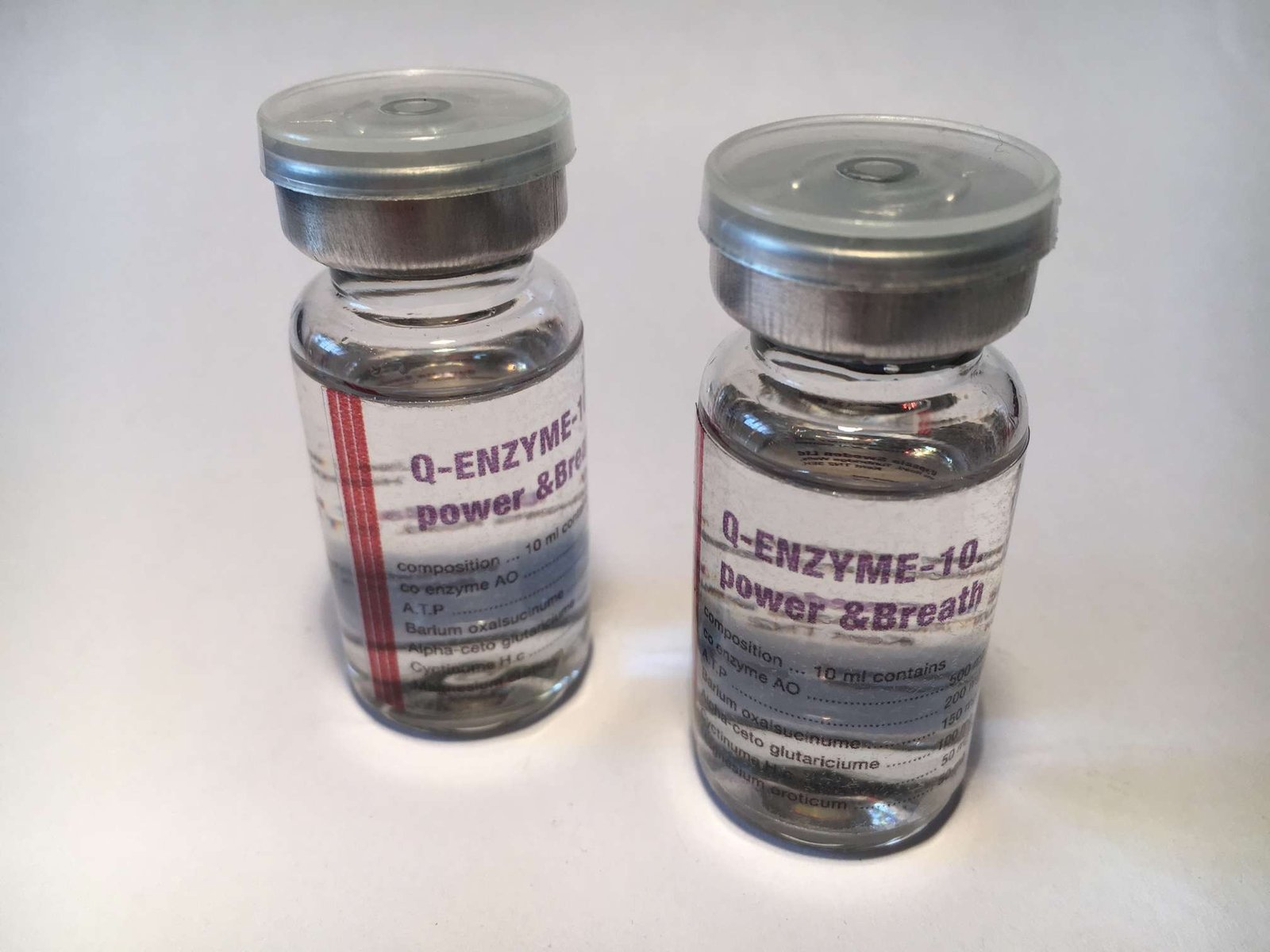
Buy Q-Enzyme 10ml Injection Online: The Definitive Veterinary Guide to Coenzyme Q10 Cellular Energy Kinetics, Cardiovascular Support, Metabolic Health, and Animal Healthcare
Managing cellular energy deficits, sub-optimal myocardial performance, age-related vitality declines, and severe oxidative stress across companion animals and performance livestock requires a high-potency, pharmaceutical-grade metabolic cofactor. When animals experience increased metabolic demands, chronic fatigue, or cardiovascular stress, cellular mitochondria often struggle to synthesize adequate chemical energy ($\text{ATP}$), leading to cellular exhaustion and declining physiological function.
Left unmanaged, chronic cellular energy depletion and oxidative stress compromise cardiac output, impair athletic recovery, and accelerate systemic tissue fatigue.
Relying on standard oral supplements is often insufficient when immediate systemic availability or high-tissue penetration is required during intensive recovery protocols.
To provide powerful, direct-acting mitochondrial support backed by potent antioxidant protection, professional veterinarians and advanced animal caretakers rely on gold-standard injectable enzyme solutions. Q-Enzyme 10ml Injection is a premier, professional-grade metabolic formulation powered by Coenzyme Q10 (Ubidecarenone). Packaged in a multi-dose sterile glass vial, Q-Enzyme delivers targeted mitochondrial potency engineered specifically to optimize cellular energy production and protect vital organ systems.
Coenzyme Q10 Pharmacology & Mitochondrial Kinetics
Q-Enzyme delivers a targeted biochemical mechanism engineered to optimize cellular respiration and neutralize destructive free radicals:
                  [Q-Enzyme 10ml CoQ10 Injection Administered]
                                       |
                   [Systemic Distribution to High-Energy Tissues]
                                       |
          [Direct Integration into Mitochondrial Inner Membranes (Electron Transport Chain)]
                                       |
               -------------------------------------------------
              |                                                 |
     [ELECTRON SHUTTLING EFFICACY]               [POTENT LIPID ANTIOXIDANT]
   (Shuttles Electrons from Complexes I/II      (Scavenges Reactive Oxygen Species &
    to Complex III to Generate ATP)             Regenerates Vitamins C & E)
              |                                                 |
              v                                                 v
   [Maximizes Cellular Energy Output]          [Protects Cell Membranes from Oxidative Damage]
   (Boosts Myocardial & Skeletal Vigor)        (Preserves Tissue Integrity during Stress)
              |                                                 |
              v                                                 v
   [Supports Heart & Liver Function]           [Accelerates Post-Exertion Recovery]
              |                                                 |
               =========================> <=====================
                                       |
                                       v
                   [Complete Restoration of Mitochondrial Cellular Respiration]
                                       |
                   [Rapid Recovery of Vitality, Endurance, Cardiac Efficiency, & Systemic Health]
1. Mitochondrial Electron Transport and ATP Synthesis
Coenzyme Q10 ($\text{CoQ10}$ / Ubidecarenone) is an essential lipid-soluble quinone found naturally within the inner mitochondrial membranes of aerobic organisms. It functions as an indispensable mobile electron carrier in the respiratory chain, shuttling electrons between complexes I/II and complex III to drive the synthesis of adenosine triphosphate ($\text{ATP}$). Because high-energy organs—such as the heart, skeletal muscles, liver, and kidneys—possess the highest mitochondrial density, they depend heavily on an uninterrupted supply of $\text{CoQ10}$ for optimal function.
2. Powerful Lipid Antioxidant Protection
Free Radical Neutralization: Acts as a frontline endogenous antioxidant, protecting cellular membranes, proteins, and nuclear DNA from oxidative damage caused by reactive oxygen species ($\text{ROS}$).
Synergistic Regeneration: Actively participates in the regeneration of secondary antioxidants such as reduced vitamin E and vitamin C, reinforcing total cellular defense mechanisms.
Primary Clinical & Animal Health Indications
Q-Enzyme 10ml Injection is an essential therapeutic and supportive tool for veterinary clinics and advanced animal care facilities:
Cardiovascular Support & Cardiomyopathy: Supportive management for dogs, cats, and performance animals experiencing myocardial weakness, age-related heart failure, or sub-optimal cardiac output.
Mitochondrial & Metabolic Support: Enhances cellular respiration in animals suffering from chronic exhaustion, myopathies, or systemic recovery deficits.
Oxidative Stress & Cellular Aging: Mitigates tissue damage associated with chronic inflammatory conditions, high-intensity athletic exertion, and degenerative aging processes.
Adjunctive Organ Protection: Protects high-metabolism organs against secondary oxidative stress during intensive pharmacological therapies.
Recommended Administration and Dosing Protocols
To guarantee absolute sterility, proper absorption, and patient safety, Q-Enzyme must be administered strictly according to approved route and handling guidelines.
Dosing Reference Table
The table below outlines standard administration guidelines for Coenzyme Q10 Injectable Solutions:
| Target Application | Clinical Objective | Standard Dosage Reference | Approved Route | Administration Frequency |
| Small Animals (Dogs/Cats) | Myocardial & Mitochondrial Support | As prescribed by veterinarian | Intramuscular (IM) | Weekly or bi-weekly as directed |
| Equine / Large Animals | Athletic Recovery & Metabolic Support | Proportionate to body mass | Intramuscular (IM) | Per veterinary scheduling |
Clinical Safety, Precautions, and Storage
Injection Site Care: As with any intramuscular injection, transient localized discomfort, mild swelling, or tenderness may occasionally occur at the injection site. Rotate injection sites with each administration.
Concurrent Medication Awareness: Use with caution in animals concurrently receiving blood pressure regulators or anticoagulant therapies, as metabolic cofactors can interact with cardiovascular hemodynamics.
Storage Parameters: Store unopened vials at controlled room temperature between 15°C and 30°C (59°F to 86°F), protected from direct light and moisture. Keep out of reach of children and animals.
Frequently Asked Questions (FAQ)
What is the active ingredient in Q-Enzyme Injection?
Q-Enzyme contains Coenzyme Q10 (Ubidecarenone), a vitamin-like metabolic cofactor and potent cellular antioxidant.
Why is Coenzyme Q10 important for animal health?
CoQ10 is vital for the production of cellular energy ($\text{ATP}$) within the mitochondria and protects high-energy organs like the heart and skeletal muscles from oxidative damage.
How is Q-Enzyme administered?
Q-Enzyme injection is formulated for intramuscular (IM) administration to ensure steady systemic uptake into energy-intensive tissues.
Where can I buy genuine Q-Enzyme 10ml Injection online?
You can safely purchase authentic, veterinarian-approved Q-Enzyme 10ml Vials online through Pet Well Global. We manage and store all specialized metabolic inventory under strict environmental controls to guarantee absolute product freshness, safety, and full potency.
Secure Premium Sourcing from Pet Well Global
At Pet Well Global, we understand that supporting advanced cellular health and myocardial function requires absolute product reliability. Every vial of Q-Enzyme Injection is sourced through authorized veterinary distribution networks, stored in our climate-controlled warehouse, and shipped securely to ensure complete product quality.
Q-enzyme 10 ml A compound needed for the proper functioning of an enzyme, a protein that speeds up the rate at which chemical reactions take place in the body. q-enzyme is used to produce energy to fuel cell growth and maintenance. Coenzyme q-enzyme 10 ml is thought to improve the function of mitochondria, the “powerhouses” that produce energy in cells is also an antioxidant, a substance that protects cells from highly reactive chemicals called free radicals that can damage cells and their DNA. The highest amounts of q-enzyme 10 ml are in the heart, liver, kidneys, and pancreas and the lowest amounts are in the lungs. The levels of q-enzyme 10 ml normally decline with age.
A compound needed for the proper functioning of an enzyme, a protein that speeds up the rate at which chemical reactions take place in the body. q-enzyme is used to produce energy to fuel cell growth and maintenance. ml is thought to improve the function of mitochondria, the “powerhouses” that produce energy in cellsl is also an antioxidant, a substance that protects cells from highly reactive chemicals called free radicals that can damage cells and their DNA. The highest amounts of q-enzyme 10 ml are in the heart, liver, kidneys, and pancreas and the lowest amounts are in the lungs. The levels of q-enzyme 10 ml normally decline with age.
q-enzyme helps to increase energy. This is because q-enzyme 10 ml has a role in producing ATP, a molecule in body cells that functions like a rechargeable battery in the transfer of energy.
Q-Enzyme 10 Benefits:
- Energy production
- Healthy heart function
- Cardiovascular health
- Supports the immune system
- Slows down the degenerative effect on muscles and bones
- Maintains the function of body organs
- Overall health and well being
COMPOSITION q-enzyme
CO enzime AO ……………………………….. 500 mg
A.T.P. ………………………………………………. 200 mg
Barium oxalsucinume ……………………. 150 mg
Alpha-ceto glutariciume ………………… 100 mg
Cyctinume H.c. ………………………………. 50 mg
Magnesium oroticum ………………………. 50 mg
SUGGESTED RACING ADMINISTRATION AND DOSAGE
A compound needed for the proper functioning of an enzyme, a protein that speeds up the rate at which chemical reactions take place in the body. Coenzyme Q10 is used to produce energy to fuel cell growth and maintenance.is thought to improve the function of mitochondria, the “powerhouses” that produce energy in cells

Reviews
There are no reviews yet.