
Buy Lactanase Injection 100ml Online: The Definitive Veterinary Guide to Pyruvate Dehydrogenase Activation, Lactic Acid Control, and Aerobic Stamina in Racing Horses and Camels
In high-performance equine and camel racing industries, an animal’s athletic threshold is governed by its capability to efficiently convert nutrients into cellular energy under extreme physical duress. During high-speed gallops or intense sprints, active skeletal muscle fibers rapidly deplete their baseline oxygen supplies. To maintain output, the cells shift heavily into anaerobic glycolysis.
A severe consequence of this shift is the massive production and accumulation of lactic acid and free hydrogen ions within the deep muscle tissue. This localized biochemical shift causes immediate tissue acidosis, resulting in rapid muscular fatigue, a shortened stride, prolonged post-race recovery, and exertional rhabdomyolysis—clinically known as tying-up syndrome.
Traditional over-the-counter vitamin pastes frequently fail to provide immediate protection due to delayed, unpredictable absorption rates through the intestinal walls during intense physical stress.
This comprehensive clinical blueprint outlines the molecular pharmacology, cellular metabolic cascades, approved athletic indications, and precise administration protocols for Lactanase 100ml Injection.
1. Molecular Pharmacology & Mechanism of Action
Lactanase Injection works through a highly targeted biochemical mechanism that directly alters how muscle cells process carbohydrates during maximum exertion:
                            [Lactanase Injection 100ml Administered]
                                          |
                        [Rapid Systemic Vascular Bioavailability]
                                          |
                        [Direct Pentration into Muscle Cells]
                                          |
                    [Inactivation of Pyruvate Dehydrogenase Kinase]
                                          |
                     [Activation of Pyruvate Dehydrogenase (PDH)]
                                          |
                 -------------------------------------------------
                |                                                 |
       [FATIGUING PATHWAY]                               [LACTANASE PATHWAY]
    (Conversion to Lactic Acid)                       (Conversion to Acetyl-CoA)
                |                                                 |
         (Path Inhibited)                                (Drives Aerobic Metabolism)
                |                                                 |
                v                                                 v
    [No Local Tissue Acidosis]                       [Enters Krebs Cycle for High ATP]
                |                                                 |
                 ------------------------> <----------------------
                                        |
                                        v
                    [Delays Intramuscular Exhaustion & Pain]
                                        |
                    [Accelerated Post-Race Recovery & Repair]
Enzyamtic Stimulation via Dichloroacetic Acid (DCA)
The primary active agent in Lactanase Injection is Dichloroacetic Acid ($120\ \mu\text{g/mL}$), which functions as a direct stimulator of the Pyruvate Dehydrogenase (PDH) enzyme complex inside the mitochondria. Under anaerobic stress, an opposing enzyme called pyruvate dehydrogenase kinase normally turns off PDH, forcing pyruvate to turn into fatiguing lactic acid.
The Checkpoint Blockade: Dichloroacetic acid selectively blocks this kinase enzyme, keeping the PDH complex permanently activated.
The Aerobic Shift: With PDH active, pyruvate is safely guided into the aerobic Krebs Cycle as Acetyl-CoA, maximizing high-yield ATP generation while keeping lactic acid production to an absolute minimum.
Systemic Buffering via Sodium Gluconate
Lactanase Injection incorporates Sodium Gluconate ($250\ \text{mg/mL}$), which works alongside DCA as a physiological buffering agent. It reinforces the animal’s natural blood and tissue buffering capacities, safely neutralizing any free hydrogen ions that escape cellular boundaries, thereby preventing localized cramping and post-exercise muscle stiffness.
2. Core Performance Clinical Indications
Lactanase Injection 100ml is an indispensable conditioning tool across elite veterinary sports medicine networks:
Exertional Myopathy (Tying-Up) Prophylaxis: Utilized as a standard preventative treatment for horses and camels with a known metabolic or genetic history of severe muscle cramping and tying-up.
Anaerobic Threshold Optimization: Extends the athletic endurance of racing animals by delaying the point at which skeletal muscles succumb to metabolic fatigue and acidity.
Post-Exertion Soreness Recovery: Minimizes the typical 24-to-48-hour post-race stiffness by ensuring clean carbohydrate utilization during exercise.
Rehabilitation of Elevated Muscle Enzymes: Helps restore baseline resting parameters in animals showing elevated Creatine Kinase (CK) and AST serum profiles following strenuous exercise.
3. Recommended Administration and Dosing Protocols
To guarantee proper systemic absorption and ensure animal safety, Lactanase Injection 100ml must be administered following strict clinical guidelines.
Veterinary Dosing Reference Table
The table below outlines standard clinical dosing protocols for Lactanase Injection 100ml:
| Target Performance Class | Average Animal Weight | Recommended Volume Dose | Approved Injection Route | Administration Schedule |
| Performance Horses | 450 to 550 kg | 20.0 mL to 40.0 mL | Slow Intravenous (IV) | Administer 4 to 6 hours prior to hard work or competition. |
| Racing Camels | 400 to 500 kg | 15.0 mL to 30.0 mL | Slow Intravenous (IV) | Inject 4 to 6 hours prior to the event or fast training block. |
| Dogs (Greyhounds) | 25 to 35 kg | 1.0 mL to 2.0 mL | Slow Intravenous (IV) | Give 4 hours pre-race under direct veterinary care. |
Clinical Adjustment: For maximum metabolic support in highly susceptible tying-up cases, veterinarians frequently administer a baseline dose of 20 mL the night before the race, followed by a final 20 mL dose 4 hours before post-time.
4. Clinical Safety, Anti-Doping Status, and Storage
Vascular Delivery Speed:Lactanase Injection must always be injected slowly when given intravenously. Rapid IV pushing can cause temporary blood pressure drops or transient lightheadedness in the animal.
Maintain Proper Hydration: Ensure that all treated animals have constant, unrestricted access to fresh, clean drinking water to help clear metabolic byproducts effectively.
Anti-Doping and Clean Sport Status:Lactanase Injection utilizes natural metabolic cofactors and organic salts that occur naturally in cellular physiology, making it generally free of restrictive withdrawal periods. However, because racing commissions worldwide vary regarding pre-race injection regulations and trace substance tolerances, always check your local rules (such as the FEI or IFHA) before race day.
Storage Parameters: Store the glass vial upright inside its original cardboard package to protect the active solution from direct sunlight. Keep in a cool, dry environment between 15°C and 25°C, and protect from freezing. Discard any remaining solution 28 days after the first needle puncture.
5. Frequently Asked Questions (FAQ)
What is the primary clinical difference between Lactanase and Lactalex?
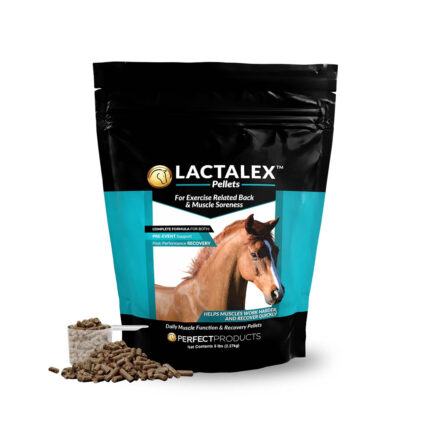
Lactanase Injection is a high-potency, fast-acting sterile injection containing Dichloroacetic Acid, which activates the PDH enzyme complex within hours for immediate pre-race support. Lactalex is a daily oral pellet/paste supplement featuring Alpha-Lipoic Acid and amino acids, designed for long-term nutritional maintenance.
Can Lactanase be mixed directly with other vitamins inside the syringe?
No. Lactanase features a highly sensitive chemical and pH balance. Mixing it with other compounds, amino acids, or antibiotics within the same syringe can cause chemical interactions, precipitation, or inactivation of the active DCA ingredient.
Why must Lactanase be given exactly 4 to 6 hours before a race?
This specific window allows the Dichloroacetic Acid to be fully absorbed, pass through the blood-muscle barrier, and lock the Pyruvate Dehydrogenase enzyme complex into its active state exactly as the horse begins its high-intensity workout.
Where can I buy genuine Lactanase 100ml online?
You can safely purchase authentic, factory-sealed Lactanase Injection 100ml online directly through Pet Well Global. We maintain all specialized medical stock under strict environmental conditions to guarantee complete sterility and full therapeutic value upon arrival.
6. Secure Performance Sourcing from Pet Well Global
At Pet Well Global, we recognize that premium competitive sports demand exceptional product standards. Every vial of Lactanase Injection 100ml is stored within our modern, climate-controlled pharmaceutical facility and handled with care to ensure full stability and complete clinical reliability for your stable.
Lactanase Injection 100ml supplementation may aid the body in supporting healthy function of reduction of lactic acid accumulation and may help delay muscle fatigue. Lactanase Injection may also help reduce “Tying Up.” Lactanase contains dichloroacetic acid (DCA), which plays a role in the process of lactic acid production. When supplementing with DCA a reduction in the rate of lactic acid production and accumulation in muscles is seen.
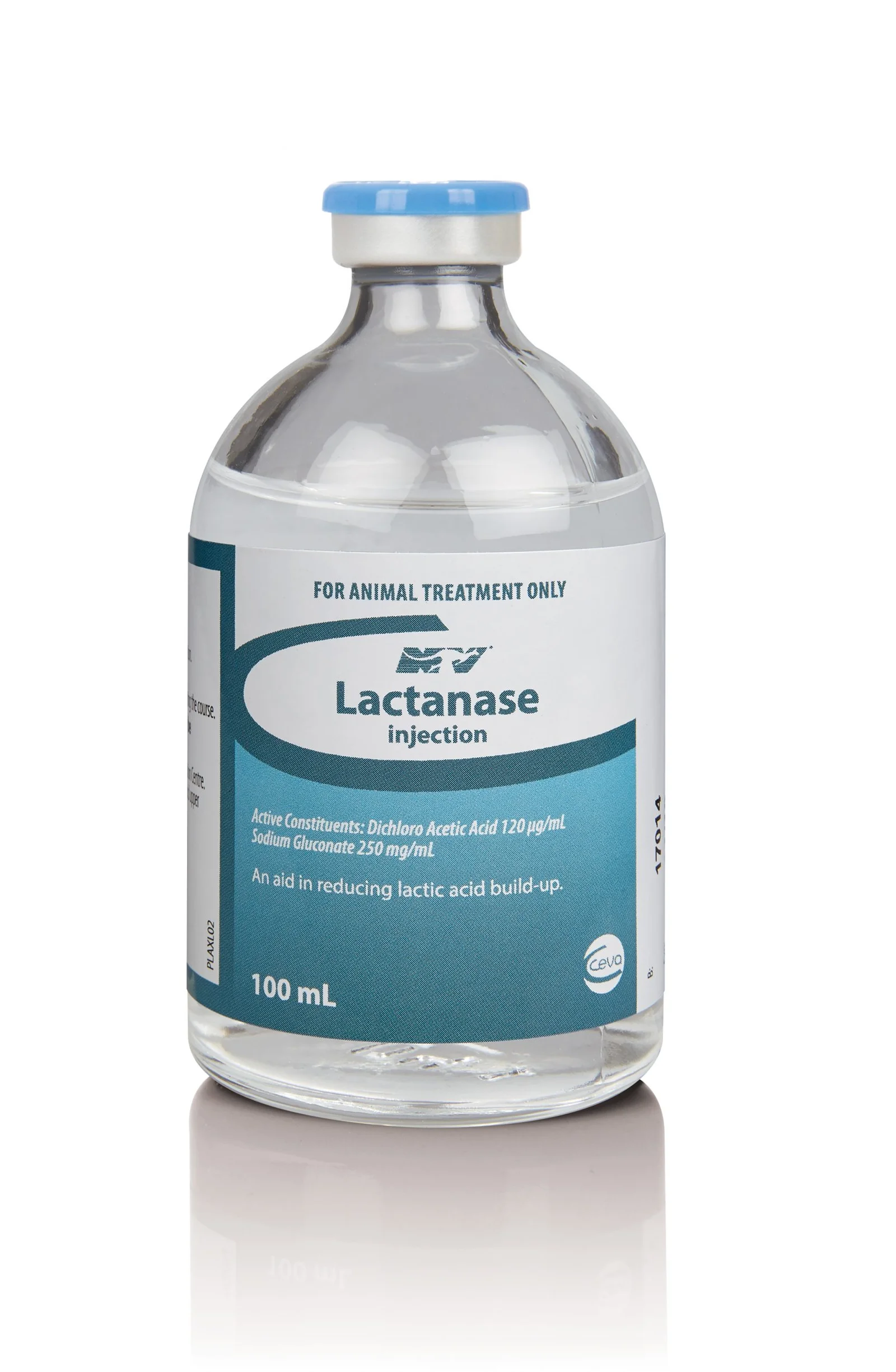
COMPOSITION: Dichloro-acetic acid 120 ug/mL, Sodium gluconate 250 mg/mL
FOR: Race Horses, Greyhounds, Dogs, Camels
ADMINISTRATION: Give 20 – 40 mL, 1 – 2 times weekly.
PRESENTATION: 100 mL sterile multi-dose glass vial.
LACTANASE 100ML
STORAGE: Store below 25 C (Air Conditioning)
NOTES: This product can be used with any other Vitamin or supplement from our shop. This product is best used the day before and the day of event.
These statements have not been evaluated by the Food and Drug Administration. This product is not intended to diagnose, treat, cure, or prevent any disease.
Lactanase Injection 100ML
ACTIONS: Lactanase Injection is used to help reduce the incidence of tying up by reducing the buildup of lactic acid in the muscle cells.
INDICATIONS: Lactanase Injection contains dichloroacetic acid, which is an activator of the enzyme pyruvate dehydrogenase. This enzyme plays a central role in the process of lactic acid production during hard work and extensive exercise. Supplementing with dichloroacetic acid (DCA) results in activation of the enzyme pyruvate dehydrogenase, which leads to a reduction in the rate of lactic acid production and accumulation in muscles. Elevated plasma lactate levels result in a reduction in pH which contributes to muscle fatigue and decreased muscle performance. Supplementing with DCA has been shown to reduce lactic acid accumulation during exercise and also produce a significant delay in muscle fatigue.
The pathogenesis related to exertional rhabdomyolysis (Tying Up) in horses is related to lactic acidosis during exercise and associated low muscle pH. Sodium bicarbonate and dimethylglycine (DMG), which may help to reduce lactic acid accumulation during exercise, have also been used to assist in the prevention of “tying up†in horses. Similarly, DCA (LACTANASE) results in a reduction in the rate of lactate accumulation and a delay in the onset of muscle fatigue.
CATEGORY: Muscle Damage, Tying Up
FOR: Horses, Dogs, Camels
DOSAGE & ADMINISTRATION: Administer 20-40 ml by intravenous (diluted in 1 liter saline or administer via catheter) 1-2 times weekly.
STORAGE: Store below 25 C (Air Conditioning)
NOTES: This product can be used with any other Vitamin or supplement from Racehorse Meds. This product is best used the day before and the day of event.
For use as a supplemental source of Vitamins & Amino Acids in horses, cattle, sheep, swine, camels, alpacas and pigeons. These statements have not been evaluated by the Food and Drug Administration. This product is not intended to diagnose, treat, cure or prevent any disease.
WARNING: Take caution to avoid leakage from the vein. LACTANASE is extremely irritant if given outside the vein. Avoid accidental contact with mucous membranes or eyes. Avoid accidental spillage or overspray.
For use as a supplemental source of Vitamins & Amino Acids in horses, cattle, sheep, swine, camels, alpacas and pigeons. These statements have not been evaluated by the Food and Drug Administration. This product is not intended to diagnose, treat, cure or prevent any disease

Reviews
There are no reviews yet.