
Buy Ketaset Injection (100 mg/mL) / Ketamine Hydrochloride Solution: The Definitive Guide to Dissociative Anesthesia, Pharmacology, and Clinical Management
Managing surgical anesthesia, short-term procedural restraint, diagnostic immobilization, and multimodal pain control in horses, cattle, companion animals, and exotic species requires a reliable, rapid-acting parenteral anesthetic. When veterinary procedures demand dependable unconsciousness combined with cardiovascular stability and analgesia, practitioners rely on gold-standard dissociative agents.
Left unmanaged, inadequate chemical restraint or poorly controlled anesthetic depth can lead to dangerous animal movement, extreme stress, operative trauma, and severe safety risks to both the patient and veterinary staff.
Relying solely on mild sedatives is frequently insufficient for painful surgical interventions or complete immobilization.
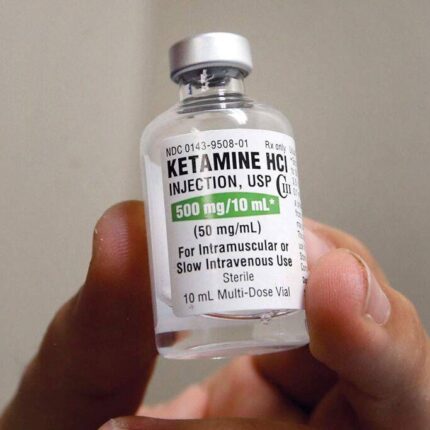
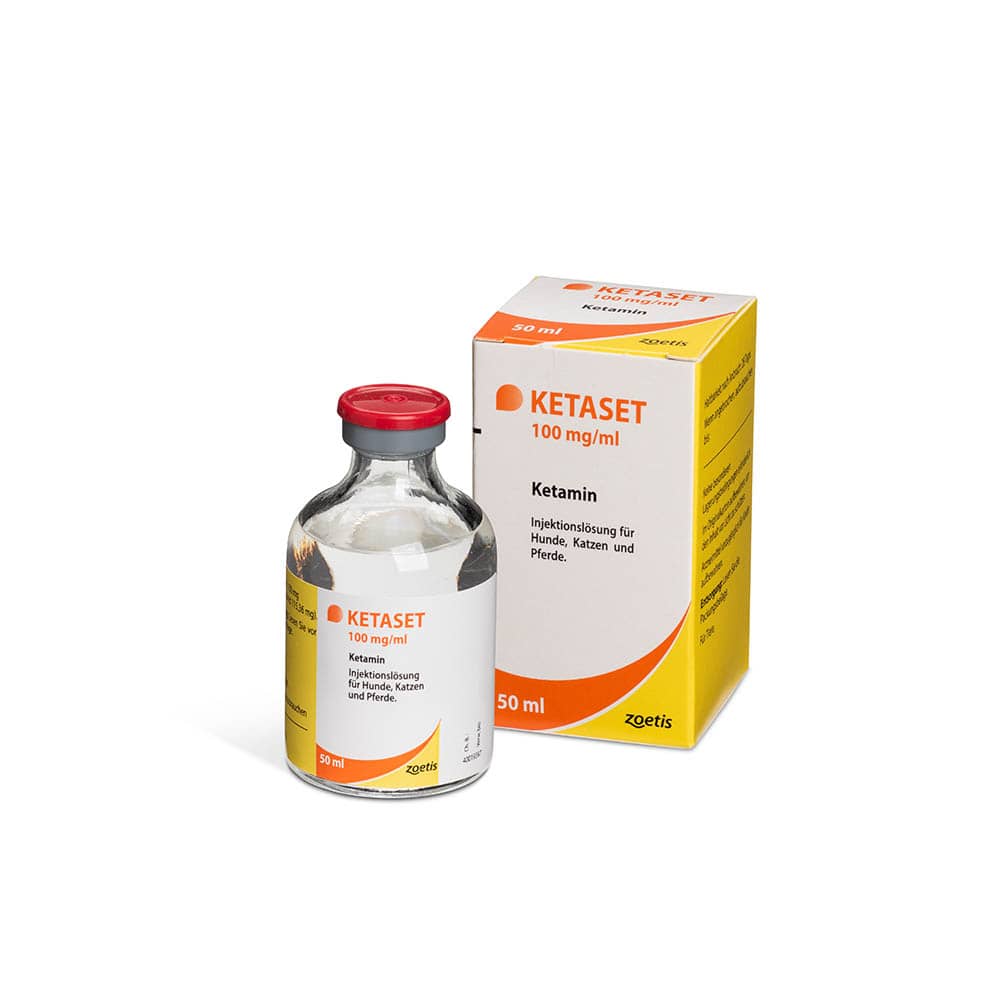
To provide safe, rapid dissociative anesthesia backed by established veterinary standards, veterinary professionals rely on trusted parenteral formulations. Ketaset Injection (manufactured by Zoetis) is a professional-grade injectable anesthetic containing Ketamine Hydrochloride at a concentration of $100\ \text{mg/mL}$. Packaged in a sterile multi-dose glass vial, ketaset Injection delivers targeted central nervous system dissociation engineered specifically for advanced veterinary surgical and restraint protocols.
Dissociative Pharmacology & Anesthetic Kinetics
ketaset Injection delivers a targeted biochemical mechanism engineered to induce a unique state of functional dissociation between the thalamocortical and limbic systems:
                  [ketaset Injection 100 mg/mL Administered (IV, IM, or SC)]
                                              |
                   [Rapid Systemic Absorption and Crossing of the Blood-Brain Barrier]
                                              |
               [Non-Competitive Antagonism of NMDA Receptors in the Central Nervous System]
                                              |
               -------------------------------------------------
              |                                                 |
     [BLOCKADE OF NMDA RECEPTORS]                [STIMULATION OF SYMPATHETIC OUTFLOW]
   (Prevents Glutamate Excitatory Signaling)   (Increases Heart Rate, Blood Pressure, & Cardiac Output)
              |                                                 |
              v                                                 v
   [Dissociative Anesthetic State]             [Preservation of Pharyngeal/Laryngeal Reflexes]
   (Trance-like Amnesia & Profound Analgesia)  (Maintains Autonomous Airway Tone & Respiration)
              |                                                 |
              v                                                 v
   [Hepatic Biotransformation & Renal Excretion] [Balanced Multimodal Anesthesia]
   (Metabolized by Liver; Excreted in Urine)   (Combined Safely with Alpha-2 Agonists or Tranquilizers)
              |                                                 |
               =========================> <=====================
                                              |
                                              v
                   [Complete Surgical Anesthesia and Controlled Recovery]
                                              |
                   [Pain-Free Surgical Environment, Stable Hemodynamics, & Smooth Recovery]
1. Mechanism of Dissociative Anesthesia
Ketamine hydrochloride is a non-barbiturate arylcyclohexylamine derivative that acts primarily as a non-competitive antagonist at N-methyl-D-aspartate ($\text{NMDA}$) receptors in the brain. Unlike traditional general anesthetics that cause generalized central nervous system depression, ketamine creates a “dissociative” state where the patient appears cataleptic, amnestic, and profoundly analgesic, while preserving protective pharyngeal and laryngeal reflexes and spontaneous respiration.
2. Pharmacokinetic and Cardiovascular Profile
Rapid Onset: Crosses the blood-brain barrier swiftly following intravenous, intramuscular, or subcutaneous injection, producing anesthesia within minutes.
Sympathomimetic Stimulation: Stimulates the central sympathetic nervous system, leading to increased heart rate, mean arterial blood pressure, and cardiac output, making it uniquely valuable in compromised or hypovolemic patients.
Primary Clinical Indications
Ketaset Injection is utilized across veterinary medicine for induction and maintenance of anesthesia:
Surgical Anesthesia Induction: Used as an induction agent prior to general inhalation anesthesia or as a sole agent for short minor surgical procedures in cats and sub-human primates.
Equine Field Anesthesia: Combined with alpha-2 agonists (such as xylazine or detomidine) and muscle relaxants (such as guaifenesin) to provide reliable intravenous total intravenous anesthesia ($\text{TIVA}$) or short field surgical knockdowns in horses.
Restraint and Immobilization: Safe chemical immobilization of uncooperative or aggressive companion animals, exotic species, and wildlife for clinical examinations or diagnostic procedures.
Recommended Administration and Dosing Protocols
To guarantee absolute patient safety, smooth induction, and proper hemodynamic control, ketaset Injection must be administered strictly according to approved route and combination guidelines.
Dosing Reference Table
The table below outlines standard operational parameters for Ketaset Injection ($100\ \text{mg/mL}$):
| Target Species | Clinical Application Focus | Standard Dosage Range | Administration Route |
| Feline (Cats) | Minor Surgery / Restraint | $10$ to $15\ \text{mg/kg}$ ($4.5$ to $7\ \text{mg/lb}$) | Intravenous ($\text{IV}$) |
| Feline (Cats) | Sole Anesthetic Agent | $15$ to $22\ \text{mg/kg}$ ($7$ to $10\ \text{mg/lb}$) | Intramuscular ($\text{IM}$) |
| Equine (Horses) | Field Anesthesia / Induction | $2.2\ \text{mg/kg}$ ($1\ \text{mL}$ per $100\ \text{lbs}$) | Intravenous ($\text{IV}$) following xylazine sedation |
Clinical Safety, Precautions, and Storage
Eye Protection: Ketamine causes the eyes to remain open with nystagmus; ophthalmic lubricating ointment must be applied immediately following induction to prevent corneal desiccation and ulceration.
Emergence Delirium: Unbalanced administration (using ketamine alone without prior tranquilization) can result in hyper-responsiveness, muscle rigidity, and stormy recoveries. Pre-medication with sedatives is mandatory.
Contraindications: Contraindicated in animals with severe cardiac disease, uncompensated hypertension, severe renal or hepatic impairment, or glaucoma (as it increases intraocular pressure).
Storage Parameters: Store unopened glass vials at controlled room temperatures between 15°C and 30°C (59°F and 86°F). Protect from direct light.
ketaset Injection Fequently Asked Questions (FAQ)
What is the active ingredient in Ketaset Injection?
ketaset Injection contains Ketamine Hydrochloride at a concentration of $100\ \text{mg/mL}$, functioning as a rapid-acting dissociative anesthetic.
Can Ketamine be used safely in cats and horses?
Yes. It is widely approved and utilized for feline surgical anesthesia and equine field anesthesia, almost always combined with sedatives or muscle relaxants for optimal safety.
Why is an eye lubricant required during ketamine anesthesia?
Ketamine prevents normal blinking and causes the eyes to remain wide open, making lubricating eye drops essential to protect the corneas from drying out.
Where can I buy genuine Ketaset Injection 100mg/ml online?
You can safely source authentic, pharmaceutical-grade Ketaset Injection ($100\ \text{mg/mL}$) online through Pet Well Global. We store all controlled veterinary anesthetics and specialized pharmaceuticals under rigorous regulatory and climate-controlled conditions to guarantee absolute product freshness, safety, and full potency.
Secure Professional Sourcing from Pet Well Global
At Pet Well Global, we understand that managing surgical anesthesia and emergency immobilization requires absolute product reliability and strict inventory compliance. Every vial of Ketaset Injection is sourced through authorized veterinary distribution networks, stored in our climate-controlled facility, and handled with precision.
ketaset injection As an anaesthetic agent for diagnostic and surgical procedures. When used by intravenous or intramuscular injection, is best suited for short procedures. With additional doses, or by intravenous infusion, Ketamine can be used for longer procedures. If skeletal muscle relaxation is desired, a muscle relaxant should be used and respiration should be supported.
For the induction of anaesthesia prior to the administration of other general anaesthetic agents. To supplement other anaesthetic agents.
Specific areas of application or types of procedures :ketamin injection
When the intramuscular route of administration is preferred.
Debridement, painful dressings, and skin grafting in burned patients, as well as other superficial surgical procedures.
Neurodiagnostic procedures such as pneumoencephalograms, ventriculograms, myelograms, and lumbar punctures.
Diagnostic and operative procedures of the eye, ear, nose, and mouth, including dental extractions.
Note: Eye movements may persist during ophthalmological procedures.ketamin injection
Anaesthesia in poor-risk patients with depression of vital functions or where depression of vital functions must be avoided, if at all possible.
Orthopaedic procedures such as closed reductions, manipulations, femoral pinning, amputations, and biopsies.
Sigmoidoscopy and minor surgery of the anus and rectum, circumcision and pilonidal sinus.
Cardiac catheterization procedures.
Caesarean section; as an induction agent in the absence of elevated blood pressure.
Anaesthesia in the asthmatic patient, either to minimise the risks of an attack of bronchospasm developing, or in the presence of bronchospasm where anaesthesia cannot be delayed.
For intravenous infusion, intravenous injection or intramuscular injection.
NOTE: All doses are given in terms of ketamine base
Adults, elderly (over 65 years) and children:
For surgery in elderly patients ketamine has been shown to be suitable either alone or supplemented with other anaesthetic agents.
Preoperative preparations
Ketamine has been safely used alone when the stomach was not empty. However, since the need for supplemental agents and muscle relaxants cannot be predicted, when preparing for elective surgery it is advisable that nothing be given by mouth for at least six hours prior to anaesthesia.
Premedication with an anticholinergic agent (e.g. atropine, hyoscine or glycopyrolate) or another drying agent should be given at an appropriate interval prior to induction to reduce ketamine- induced hypersalivation.
Midazolam, diazepam, lorazepam, or flunitrazepam used as a premedicant or as an adjunct to ketamine, have been effective in reducing the incidence of emergence reactions.
Onset and duration
As with other general anaesthetic agents, the individual response to Ketamine is somewhat varied depending on the dose, route of administration, age of patient, and concomitant use of other agents, so that dosage recommendation cannot be absolutely fixed. The dose should be titrated against the patient’s requirements.
Because of rapid induction following intravenous injection, the patient should be in a supported position during administration. An intravenous dose of 2 mg/kg of bodyweight usually produces surgical anaesthesia within 30 seconds after injection and the anaesthetic effect usually lasts 5 to10 minutes. An intramuscular dose of 10 mg/kg of bodyweight usually produces surgical anaesthesia within 3 to 4 minutes following injection and the anaesthetic effect usually lasts 12 to 25 minutes. Return to consciousness is gradual.
A. Ketamine as the sole anaesthetic agent
Intravenous Infusion
The use of Ketamine by continuous infusion enables the dose to be titrated more closely, thereby reducing the amount of drug administered compared with intermittent administration. This results in a shorter recovery time and better stability of vital signs.
A solution containing 1 mg/ml of ketamine in dextrose 5% or sodium chloride 0.9% is suitable for administration by infusion.
General Anaesthesia Induction
An infusion corresponding to 0.5 – 2 mg/kg as total induction dose.
Maintenance of anaesthesia
Anaesthesia may be maintained using a microdrip infusion of 10 – 45 microgram/kg/min (approximately 1 – 3 mg/min).
The rate of infusion will depend on the patient’s reaction and response to anaesthesia. The dosage required may be reduced when a long acting neuromuscular blocking agent is used.
Intermittent Injection
Induction
Intravenous Route
The initial dose of Ketamine administered intravenously may range from 1 mg/kg to 4.5 mg/kg (in terms of ketamine base). The average amount required to produce 5 to 10 minutes of surgical anaesthesia has been 2.0 mg/kg. It is recommended that intravenous administration be accomplished slowly (over a period of 60 seconds). More rapid administration may result in respiratory depression and enhanced pressor response.
Dosage in Obstetrics
In obstetrics, for vaginal delivery or in caesarean section, intravenous doses ranging from 0.2 to 1.0 mg/kg are recommended (see section 4.6 Fertility, pregnancy and lactation).
Intramuscular Route
The initial dose of Ketamine administered intramuscularly may range from 6.5 mg/kg to 13 mg/kg (in terms of ketamine base). A low initial intramuscular dose of 4 mg/kg has been used in diagnostic manoeuvres and procedures not involving intensely painful stimuli. A dose of 10 mg/kg will usually produce 12 to 25 minutes of surgical anaesthesia.
Dosage in Hepatic Insufficiency:
Dose reductions should be considered in patients with cirrhosis or other types of liver impairment. (see section 4.4 Special Warnings and Special Precautions for Use)
Dosage in Obstetrics
Data are lacking for intramuscular injection and maintenance infusion of ketamine in the parturient population, and recommendations cannot be made. Available data are presented in Section 5.2.
Maintenance of general anaesthesia
Lightening of anaesthesia may be indicated by nystagmus, movements in response to stimulation, and vocalization. Anaesthesia is maintained by the administration of additional doses of Ketamine by either the intravenous or intramuscular route.
Each additional dose is from ½ to the full induction dose recommended above for the route selected for maintenance, regardless of the route used for induction.
The larger the total amount of Ketamine administered, the longer will be the time to complete recovery.
Purposeless and tonic-clonic movements of extremities may occur during the course of anaesthesia. These movements do not imply a light plane and are not indicative of the need for additional doses of the anaesthetic.
B. Ketamine as induction agent prior to the use of other general anaesthetics
Induction is accomplished by a full intravenous or intramuscular dose of Ketamine as defined above. If Ketamine has been administered intravenously and the principal anaesthetic is slow- acting, a second dose of Ketamine may be required 5 to 8 minutes following the initial dose. If Ketamine has been administered intramuscularly and the principal anaesthetic is rapid-acting, administration of the principal anaesthetic may be delayed up to 15 minutes following the injection of Ketamine.
Reviews
There are no reviews yet.