
Buy Ketamine Injection Online: The Definitive Veterinary Guide to Dissociative Anesthesia, Pharmacological Kinetics, Multimodal Sedation Protocols, and Livestock/Small Animal Care
Managing safe chemical restraint, procedural sedation, and dissociative general anesthesia across companion animals, equines, and livestock species requires a reliable, rapid-acting, and versatile injectable agent. When veterinary clinics, field practitioners, or large animal operations handle fractious patients, perform minor surgical procedures, or induce balanced anesthesia, traditional sedatives alone frequently fail to provide adequate immobilization and profound analgesia.
Left unmanaged, inadequate restraint or un-premedicated painful interventions lead to dangerous animal movements, severe stress responses, operator injury, and compromised procedural outcomes.
Relying on single-agent protocols often introduces undesirable muscle rigidity, excessive sympathetic stimulation, or prolonged, rough recoveries.
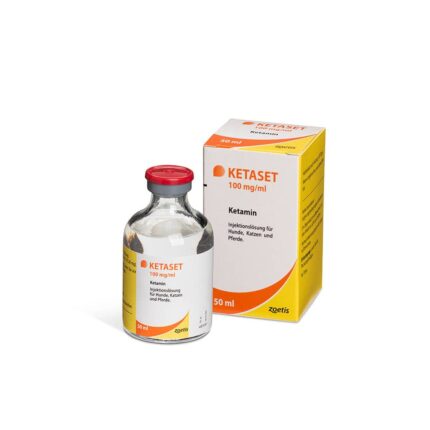
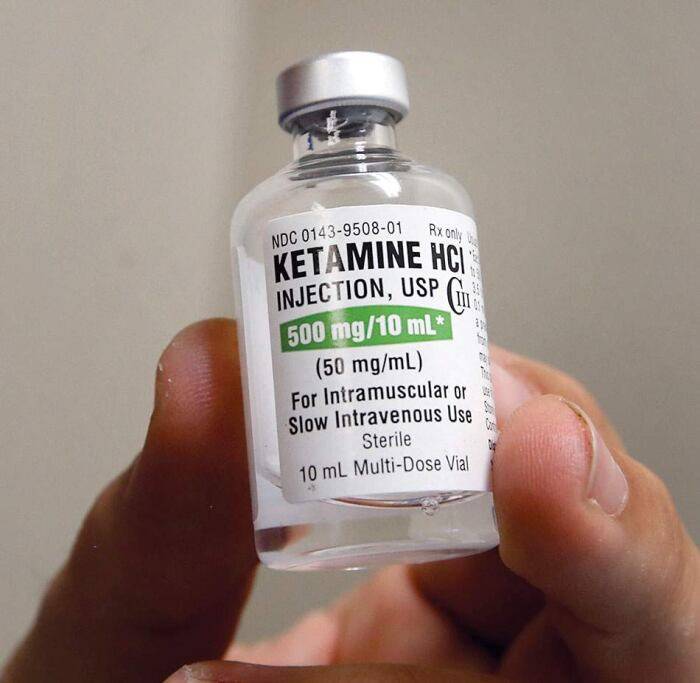
To provide powerful dissociative anesthesia and flexible multimodal immobilization backed by decades of proven veterinary safety, professionals rely on gold-standard ketamine hydrochloride solutions. Ketamine Hydrochloride Injection (commonly available in professional concentrations such as $100\ \text{mg/mL}$) is a premier, professional-grade parenteral anesthetic powered by Ketamine. Packaged in sterile multi-dose vials, Ketamine delivers targeted central nervous system dissociation engineered specifically for comprehensive veterinary anesthesia and restraint management.
Dissociative Pharmacology & Central Nervous System Kinetics
Ketamine delivers a unique biochemical mechanism engineered to disrupt higher cortical processing while preserving protective reflexes and stimulating cardiovascular parameters:
                  [Ketamine Hydrochloride Injection Administered (IV, IM, or SC)]
                                              |
                   [Rapid Systemic Absorption and Blood-Brain Barrier Penetration]
                                              |
               [Functional Dissociation Between Limbic and Thalamocortical Systems]
                                              |
               -------------------------------------------------
              |                                                 |
     [NMDA RECEPTOR ANTAGONISM]                  [SYMPATHOMIMETIC STIMULATION]
   (Blocks Excitatory Glutamatergic Pathways)   (Increases Heart Rate, Cardiac Output, & BP)
              |                                                 |
              v                                                 v
   [Induces Profound Analgesia & Catalepsy]     [Maintains Pharyngeal & Laryngeal Reflexes]
   (Blocks Pain Transmission & Awareness)       (Preserves Airway Tone in Most Species)
              |                                                 |
              v                                                 v
   [Hepatic Metabolism & Renal Clearance]       [Requires Muscle Relaxant Premedication]
   (Converted to Norketamine and Conjugated)    (Combines with Alpha-2 Agonists or Benzodiazepines)
              |                                                 |
               =========================> <=====================
                                              |
                                              v
                   [Complete Central Nervous System Dissociation & Surgical Restraint]
                                              |
                   [Safe Procedural Execution, Controlled Analgesia, & Predictable Recovery]
1. NMDA Receptor Antagonism and Catalepsy
Ketamine is a rapid-acting, non-barbiturate, non-narcotic dissociative anesthetic agent. It functions primarily as an antagonist at the $N$-methyl-$\text{D}$-aspartate ($\text{NMDA}$) receptor, blocking excitatory amino acid neurotransmission in the brain. This creates a functional state of catalepsy where the patient appears awake—with eyes remaining open and protective pharyngeal reflexes preserved—yet is completely dissociated from painful stimuli and conscious awareness.
2. Cardiovascular and Respiratory Kinetics
Sympathomimetic Support: Unlike many other general anesthetics that depress circulation, ketamine stimulates the central sympathetic nervous system, typically resulting in moderate increases in heart rate, mean arterial blood pressure, and cardiac output.
Respiratory Stability: Maintains relatively stable baseline ventilation at clinical doses, though high bolus doses or rapid intravenous administration can occasionally induce transient respiratory depression or apnea.
Primary Clinical & Veterinary Health Indications
Ketamine Injection is an indispensable cornerstone of multi-species veterinary anesthesia:
Feline and Canine Restraint and Anesthesia: Used alone for minor restraint and brief diagnostic procedures in cats, or combined extensively with $\alpha_2$-agonists (such as xylazine or medetomidine) and tranquilizers to achieve surgical anesthesia.
Equine Field Anesthesia: Deployed in combination regimens (typically following alpha-2 sedation like xylazine or detomidine) to induce smooth, controlled recumbency for short surgical procedures in horses.
Livestock and Exotics Immobilization: Utilized across cattle, sheep, goats, swine, and laboratory species as part of balanced injectable anesthetic cocktails.
Recommended Administration and Dosing Protocols
To guarantee absolute safety, optimal muscle relaxation, and smooth recovery, ketamine must always be administered in combination with appropriate sedatives or muscle relaxants rather than as a sole agent in dogs, horses, and large livestock.
Dosing Reference Table
The table below outlines representative multi-species administration guidelines for Ketamine ($100\ \text{mg/mL}$) when used in balanced protocols:
| Target Species | Clinical Protocol / Combination | Dosage Rate Reference | Approved Routes | Key Procedural Notes |
| Feline | Ketamine + Xylazine / Medetomidine | Xylazine $1\ \text{mg/kg}$ + Ketamine $10 – 22\ \text{mg/kg}$ | $\text{IM}$ or $\text{IV}$ | Excellent surgical plane; use eye lubricant as eyes remain open |
| Canine | Xylazine or Medetomidine Premed + Ketamine | Xylazine $1 – 2\ \text{mg/kg}$ + Ketamine $5 – 10\ \text{mg/kg}$ | $\text{IM}$ or slow $\text{IV}$ | Premedication mandatory to prevent muscle rigidity |
| Equine | Alpha-2 Sedative + Ketamine Induction | Xylazine $1.1\ \text{mg/kg}$ $\text{IV}$, followed rapidly by Ketamine $2.2\ \text{mg/kg}$ $\text{IV}$ | $\text{IV}$ (Strictly after sedation) | Induces rapid, smooth recumbency for short procedures |
Clinical Safety, Contraindications, and Storage
Contraindications: Do not use as a sole agent for major painful surgery without adequate muscle relaxants. Contraindicated in animals with severe cardiac disease, hypertension, glaucoma, seizure disorders, or significant renal/hepatic dysfunction.
Ocular Protection: Under ketamine anesthesia, palpebral and corneal reflexes persist, and the eyes remain open. Ophthalmic lubricating ointment must be applied immediately to prevent corneal desiccation and ulceration.
Storage Parameters: Store unopened multi-dose vials at controlled room temperature between 15°C and 30°C (59°F to 86°F). Protect from direct light. Restrict access strictly in compliance with legal controlled substance regulations.
Frequently Asked Questions (FAQ)
What is the active ingredient in Ketamine Injection?
Ketamine Injection contains Ketamine Hydrochloride, a potent non-barbiturate dissociative anesthetic agent.
Why must ketamine be combined with a sedative like xylazine in dogs and horses?
When used alone, ketamine causes significant muscle rigidity, reflex twitching, and rough recoveries. Combining it with $\alpha_2$-agonists or tranquilizers provides balanced muscle relaxation, smooth induction, and enhanced analgesia.
Can cats close their eyes under ketamine anesthesia?
No. Ketamine causes the eyes to remain wide open with reduced blinking, which makes applying protective eye ointment essential to prevent drying.
Where can I buy genuine Ketamine Injection online?
You can safely source authentic, veterinary-regulated Ketamine Hydrochloride Injection vials online through Pet Well Global (under valid veterinary license and prescription verification). We manage and store all controlled pharmaceutical inventory under rigorous regulatory and environmental controls to guarantee absolute product safety and compliance.
Secure Professional Sourcing from Pet Well Global
At Pet Well Global, we understand that maintaining reliable surgical anesthesia and emergency restraint protocols requires absolute product integrity. Every vial of Ketamine Injection is sourced through authorized veterinary pharmaceutical channels, stored in secure climate-controlled facilities, and handled in strict adherence to regulatory standards.
For prescription verifications, veterinary clinic wholesale accounts, or logistics tracking assistance, please reach out to our professional support desk directly at equinesvet@gmail.com.
Ketamine makes waves in the field of mental health, there’s a mystery around the drug that continues to elude scientists: how, exactly, it works in the brains of people with depression.
Now, scientists have uncovered a process that might contribute to ketamine’s antidepressant effect. In in mice published Thursday in Science, researchers report that ketamine appears to spark the growth of neural connections that had been diminished by chronic stress. They also discovered that the survival of those new connections — known as synapses — seems to be critical to maintaining some of ketamine’s effects.
“To the extent that what we’re modeling in the brains of mice captures something that’s happening in the brains of depressed people, this could be a promising future avenue for research,” said Dr. Conor Liston, neuroscientist and psychiatrist in the Feil Family Brain and Mind Research Institute at Weill Cornell Medicine and an author of the new study.
But experts caution that there are still significant unknowns about how ketamine works in the brain — and at this point, it’s not possible to confirm whether the new observations in mice are also happening in humans.
“It’s interesting, it’s fascinating, but it cannot explain the whole story. It’s one additional piece of a very complex puzzle,” said Dr. Cristina Cusin, who leads a ketamine treatment program at Massachusetts General Hospital and
Ketamine — a longtime anesthetic — is known to work on certain receptors in the brain known as NMDA receptors, which are involved in learning and memory. Research over the last two decades has suggested it can ease symptoms of depression, but scientists don’t understand the biology behind that effect, why the response to ketamine varies so much from one patient to the next, or why the drug’s effects wear off over time. Witha ketamine-derived nasal spray last month for treatment-resistant depression, patients have to take eight doses over their first month of treatment before being moved to a maintenance dose.
In the new research, neuroscientists at Weill Cornell looked specifically at circuitry in the medial prefrontal cortex, an area of the brain thought to be involved in depression. Research has suggested that chronic stress can affect the number of synapses, or the connection between two neurons in the brain. Liston and his colleagues wanted to see if ketamine might have reversed those effects. So they looked at what are known as dendritic spines, tiny projections that shoot off branches of neurons known as dendrites. Most dendritic spines contain functional synapses, so scientists consider them a sign of a connection between two neurons.
As mice experienced chronic stress, which is commonly used as a stand-in for depression in humans, the researchers saw an uptick in the number of dendritic spines that died off and a decrease in the number of new dendritic spines being formed.
Then, they gave the mice an antidepressant dose of ketamine — and kept watching.
“The effects on behavior were rapid — detectable just three hours after treatment,” Liston said. The mice were more likely to try to escape an unpleasant situation, prefer sugary water over plain water, and explore a maze. All three are considered markers of the chronic stress response: the lack of struggle to escape is interpreted as a lack of motivation, the disinterest in sugar water is seen as a sign that a mouse doesn’t take pleasure in a happy activity, and the tendency to stay in the closed areas of a maze suggests anxiety and a desire to stay in a safe area.
Reviews
There are no reviews yet.