
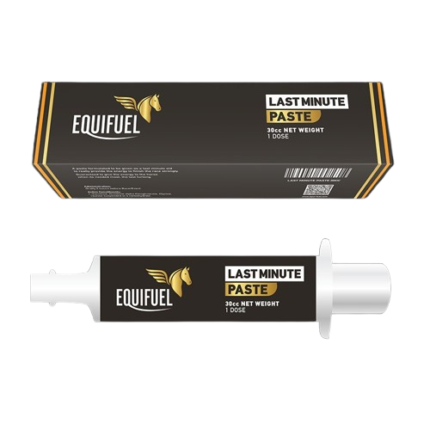
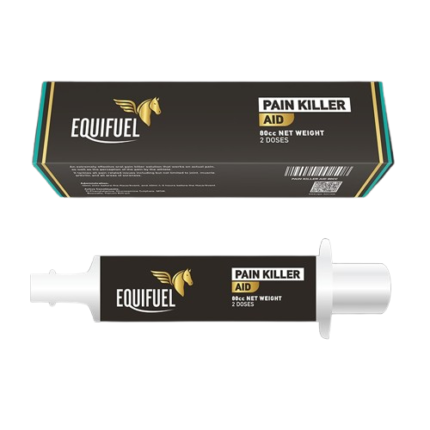
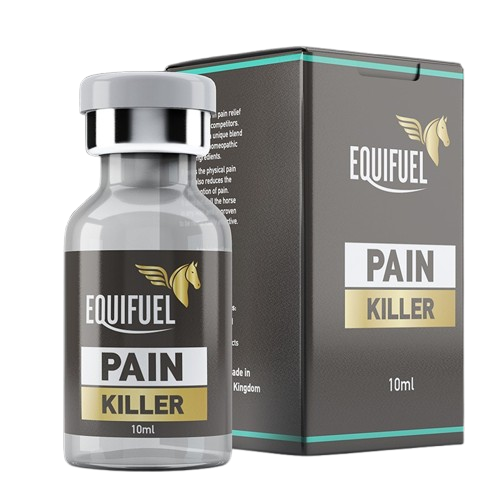
Buy Equifuel Pain Killer Injection 10ml Online: The Definitive Equine Veterinary Guide to Rapid Parenteral Analgesia, Acute Trauma Management, Severe Musculoskeletal Pain Relief, and Performance Recovery in Sport Horses
Managing acute, severe pain resulting from traumatic injuries, surgical procedures, severe colic episodes, advanced osteoarthritis, and acute laminitis in horses requires an immediate and potent parenteral intervention. When deep tissue damage or intense visceral trauma occurs, nociceptive pain signals fire rapidly through the central and peripheral nervous systems, inducing severe distress, elevated heart rate, profuse sweating, and systemic shock if left uncontrolled.
Relying solely on oral medications during acute crises is often ineffective because severe pain or digestive distress significantly slows gastrointestinal absorption and blood flow.
To achieve immediate, predictable bioavailability and bypass the digestive tract entirely during critical emergencies, equine veterinarians and professional trainers rely on fast-acting intravenous or intramuscular analgesics. Equifuel Pain Killer Injection (10ml) is a premier, high-potency parenteral formula engineered specifically for equine medicine. Packaged in a sterile $10\ \text{ml}$ multi-dose glass vial, Equifuel Pain Killer Injection acts swiftly to interrupt nociceptive pathways, alleviate deep musculoskeletal aches, control visceral distress, and restore animal comfort and stability.
This comprehensive guide covers parenteral absorption dynamics, target pain pathways, clinical emergency protocols, and precise administration guidelines for Equifuel Pain Killer Injection.
Mechanism of Action & Parenteral Pharmacokinetics
Equifuel Pain Killer Injection delivers a rapid, systemic analgesic mechanism designed for immediate central and peripheral relief:
                  [Equifuel Pain Killer Injection 10ml Administered]
                                         |
               [Direct Intravenous (IV) or Intramuscular (IM) Delivery]
                                         |
                     [Immediate Systemic Blood Plasma Surge]
                                         |
               -------------------------------------------------
              |                                                 |
       [CENTRAL NERVOUS BLOCK]                         [PERIPHERAL TISSUE SHIELD]
    (Blocks Pain Signal Transmission)                 (Suppresses Local Inflammatory Mediators)
              |                                                 |
              v                                                 v
   [Interupts Spinal Nociception]                     [Reduces Acute Edema & Synovial Heat]
   (Quiets Severe Distress & Spasms)                  (Eases Joint, Tendon, & Muscle Tension)
              |                                                 |
              v                                                 v
   [Rapid Onset of Systemic Calm]                     [Accelerates Traumatic Shock Recovery]
              |                                                 |
               =========================> <=====================
                                         |
                                         v
                    [Complete Cessation of Acute Equine Pain & Distress]
                                         |
                    [Restoration of Normal Heart Rate, Stride, & Vital Stability]
Direct Systemic Bioavailability
Administering Equifuel Pain Killer Injection via intravenous (IV) or intramuscular (IM) routes ensures that active analgesic molecules enter systemic circulation immediately, bypassing first-pass liver metabolism and delayed gastrointestinal absorption. This delivers peak therapeutic blood concentrations within minutes of administration.
Central and Peripheral Pain Control
Central Nervous System (CNS) Pathway Modulation: Elevates the pain threshold and blocks the transmission of severe nociceptive impulses within spinal and cerebral pain-processing centers.
Peripheral Anti-Inflammatory Action: Suppresses localized inflammatory cascades around traumatized joints, tendon sheaths, surgical incision sites, or bruised musculature.
Visceral Spasm Relief: Eases smooth muscle contractions associated with mild-to-moderate spasmodic colic or abdominal discomfort.
Primary Clinical & Emergency Indications
Equifuel Pain Killer Injection 10ml is an essential emergency and therapeutic tool for equine clinics, stables, and transport kits:
Acute Traumatic Injury: Rapidly controls severe pain resulting from kicks, fence lacerations, vehicular transit accidents, or bone fractures prior to transport.
Post-Surgical Analgesia: Manages post-operative pain and tissue soreness following castrations, arthroscopic joint surgeries, or soft-tissue repairs.
Severe Musculoskeletal Lameness: Provides deep analgesia for acute laminitis, severe subsolar abscesses, deep stone bruises, or acute joint flare-ups.
Visceral Distress & Spasms: Serves as an immediate veterinary adjunct for controlling acute abdominal pain and smooth muscle spasms during colic workups.
Recommended Administration and Dosing Protocols
To guarantee patient safety, rapid onset, and precise dosing, Equifuel Pain Killer Injection must be administered strictly according to approved veterinary routes.
Dosing Reference Table
The table below outlines standard administration guidelines for Equifuel Pain Killer Injection ($10\ \text{ml}$ Vial):
| Horse Weight Category | Clinical Application | Recommended Volume | Approved Route | Dosing Frequency |
| Ponies / Foals ($400 – 600\ \text{lbs}$) | Moderate Pain / Trauma | $4.0\ \text{ml}$ to $6.0\ \text{ml}$ | IV or IM | Repeat q12-24h as needed |
| Average Horses ($800 – 1100\ \text{lbs}$) | Severe Pain / Post-Op | $8.0\ \text{ml}$ to $10.0\ \text{ml}$ | IV or IM | Repeat q12-24h as needed |
| Heavy Horses ($1200+\ \text{lbs}$) | Acute Emergency / Colic | $10.0\ \text{ml}$ (Full Vial Max) | IV or IM | Repeat q12-24h as needed |
Clinical Safety, Governing Guidelines, and Storage
Governing Federation Compliance: Because powerful analgesics are strictly regulated in equestrian sports, always check current FEI, USEF, or national racing commission guidelines regarding mandatory detection times and withdrawal windows before official competition.
Veterinary Supervision Advised: Parenteral analgesics should be administered by or under the direct supervision of a licensed equine veterinarian, particularly when treating acute colic or severe systemic trauma.
Aseptic Technique: Always use a fresh, sterile needle and syringe for every injection to prevent localized abscess formation or needle-borne infection.
Storage Parameters: Store unopened $10\ \text{ml}$ vials at controlled room temperature between 15°C and 25°C (59°F to 77°F). Protect from direct sunlight and freezing. Discard any remaining product within 28 days of first needle puncture.
Frequently Asked Questions (FAQ)
How fast does Equifuel Pain Killer Injection work compared to oral pastes?
Because Equifuel Pain Killer Injection is delivered directly into the bloodstream (IV) or deep muscle tissue (IM), peak analgesic effects begin within 5 to 15 minutes, offering significantly faster emergency pain relief than oral pastes.
Can Equifuel Pain Killer Injection be administered intravenously?
Yes. When injected slowly into the jugular vein, Equifuel Pain Killer Injection provides immediate systemic action, making it ideal for acute colic episodes or severe traumatic shock where every minute counts.
How many doses are in one 10ml vial?
For an average $1,000\ \text{lb}$ horse requiring a full $10\ \text{ml}$ dose, one vial provides 1 single emergency dose. For smaller ponies or lighter weights requiring $5\ \text{ml}$, one vial provides 2 doses.
Where can I buy genuine Equifuel Pain Killer Injection 10ml online?
You can safely purchase authentic, factory-sealed Equifuel Pain Killer Injection 10ml online through Pet Well Global. We manage and store all inventory under strict environmental controls to guarantee absolute product freshness and full potency.
Secure Premium Sourcing from Pet Well Global
At Pet Well Global, we understand that handling equine emergencies and severe trauma requires absolute product reliability. Every $10\ \text{ml}$ vial of Equifuel Pain Killer Injection is sourced through authorized distribution networks, stored in our climate-controlled warehouse, and shipped securely to ensure complete product quality.
Pain Killer A breakthrough in pain relief for our equine competitors.
This product is a unique blend of herbs and homeopathic ingredients.
It helps the physical pain and also reduces the perception of pain.
It does not dull the horse in any way, and is proven to be remarkably effective.
administered ;4-6 hours before the Race/Event http://www.tacomavetmedication.com
HOW DOES IT WORK?Pain Killer
Hypoxia Inducible Factor and the HIF pathway are responsible for the expression of a variety of physiological responses to oxygen deprivation and conditions of lowered oxygen intake – similar to what would be seen with altitude training, which itself relies on adaptations mediated by this pathway to stimulate an increase in endogenous EPO and red blood cells.
Typically, the mediator of HIF undergoes rapid degradation under conditions of adequate oxygen intake. However, in an oxygen-deprived environment, it remains active for much longer and sets off a sequence of events that (among other benefits) activates the gene for producing EPO that promote efficient adaptation to hypoxia. Cobalt chloride appears to mimic the oxygen-deprived state at the genomic level, thereby causing the HIF mediator to remain stable enough to initiate increased EPO production.
WHY USE?Pain Killer
In treating horses and camels one to two times weekly you can expect a significant rise in PCV, Haemoglobin, Hematocrits and Red blood cells over a 3-4 week.
It is an effective way to produce effects similar to EPO – a huge boost for endurance animal athletes or any animal needing increased stamina and performance.
ADMINISTRATION AND DOSAGE:
Use 5 ml intravenously weekly for horses and camels.Pain Killer
Reviews
There are no reviews yet.