
Buy Lignocaine and Adrenaline Injection Online: The Definitive Veterinary Guide to Local Anesthesia, Vasoconstrictive Hemostasis, and Pain Management in Equines, Livestock, and Companion Animals
Performing surgical procedures, suturing severe lacerations, administering epidurals, or executing diagnostic nerve blocks in veterinary medicine requires dependable, fast acting, and localized pain control. While general anesthesia is valuable, it carries higher cardiovascular risks and demands extensive monitoring. For minor surgeries, wound management, and localized procedures, local or regional anesthesia is the safest and most efficient clinical choice.
However, standard local anesthetics like pure lignocaine (lidocaine) are rapidly absorbed into the surrounding tissues and blood vessels. This shortens the duration of pain relief and can lead to increased bleeding at the surgical site.
To solve this clinical challenge, veterinary practices utilize Lignocaine and Adrenaline Injection. By pairing a high-affinity sodium channel blocker with a targeted vasoconstrictor, this sterile formulation dramatically extends the duration of localized numbness, minimizes surgical hemorrhage, and reduces the risk of systemic anesthetic toxicity.
This clinical reference guide details the molecular pharmacology, cellular mechanisms of action, regional applications, precise dosing tables, and safety protocols for Lignocaine and Adrenaline Injection.
1. Clinical Pharmacology and Mechanism of Action
Lignocaine and Adrenaline Injection combines two distinct pharmacological agents that work in perfect synergy to optimize local anesthesia:
                  [Lignocaine & Adrenaline Administered]
                                    |
         ---------------------------------------------------------
        |                                                         |
        v (Lignocaine Component)                                   v (Adrenaline Component)
[Blocks Voltage-Gated Na+ Channels]                         [Binds to Alpha-1 Adrenergic Receptors]
        |                                                         |
[Inhibits Depolarization of Nerve Cell]                      [Constricts Local Blood Vessels]
        |                                                         |
[Stops Action Potential Generation]                          [Restricts Regional Blood Flow]
        |                                                         |
[Blocks Pain Signals to the Brain]                           [Slows Lignocaine Clearance]
        |                                                         |
         ----------------------------> <--------------------------
                                    |
                                    v
            [Prolonged, Bloodless Localized Pain Blockade]
Lignocaine: Blocking Voltage-Gated Sodium Channels
Lignocaine hydrochloride is an amide-type local anesthetic. At the cellular level, it diffuses across the nerve cell membrane to bind specifically to the internal receptors of voltage-gated sodium ($Na^+$) channels.
Inhibiting Depolarization: By blocking sodium channels, lignocaine prevents the rapid influx of sodium ions required to initiate and propagate electrical impulses (action potentials) along nerve fibers.
Blocking Pain Signaling: Without action potentials, the sensory nerves cannot transmit pain, temperature, or touch signals from the peripheral tissue to the central nervous system, resulting in complete local numbness.
Adrenaline: Alpha-1 Mediated Vasoconstriction
Adrenaline (epinephrine) is a potent sympathomimetic amine. When included in local anesthetics at low concentrations (typically 1:100,000 or 1:200,000), it acts directly on $\alpha_1$-adrenergic receptors located on the smooth muscle walls of local blood vessels.
Vascular Constriction: Activating these receptors causes local blood vessels to narrow (vasoconstriction), significantly reducing regional blood flow.
Prolonging Anesthesia: By restricting blood flow, adrenaline slows down the absorption of lignocaine into the bloodstream. This keeps the anesthetic concentrated at the injection site, extending its numbing effect from a standard 45 minutes to over 2 to 3 hours.
Hemostasis (Bleeding Control): Vasoconstriction minimizes bleeding at the wound or surgical incision site, providing the veterinarian with a clean, highly visible field for suturing or surgical exploration.
Reducing Systemic Toxicity: Slower absorption means the liver can metabolize and clear the anesthetic gradually, reducing peak blood concentrations and virtually eliminating the risk of systemic toxicity.
2. Core Veterinary Clinical Applications
Lignocaine and Adrenaline is an invaluable tool across equine, farm animal, and companion animal practices:
Equine Sports Medicine & Surgical Support
Diagnostic Nerve Blocks: Used to localize lameness in performance horses (e.g., palmar digital or low four-point blocks). The extended duration allows for thorough gait analysis.
Laceration Repair & Wound Debridement: Provides a bloodless field and prolonged numbness when cleaning and suturing deep wire cuts or impact wounds.
Minor Stand-up Surgeries: Ideal for sarcoid removals, skin biopsies, and dental extractions in standing, sedated horses.
Bovine & Livestock Veterinary Care
Paravertebral & Local Infiltration Blocks: Provides complete abdominal wall anesthesia for standing flank laparotomies, such as Caesarean sections or displaced abomasum corrections.
Dehorning & Castration Blocks: Blocks the cornual nerve in calves and goats to ensure pain-free dehorning.
Epidural Anesthesia: Administered in the caudal epidural space to facilitate dystocia (difficult birth) management or rectal prolapse repairs by numbing the perineal region.
Small Animal Surgery (Dogs and Cats)
Minor Skin Excisions: Numbs localized areas for cyst removals or laceration repairs.
Ring Blocks for Digit Amputations: Blocks sensory nerves around paws or claws to provide continuous post-operative pain relief.
3. Administration Techniques and Dosing Guidelines
To ensure precise local anesthesia and prevent tissue complications, always follow sterile administration protocols.
Veterinary Dosing Reference Table
| Target Species | Clinical Application | Standard Volume Dose | Injection Technique | Key Precaution |
| Adult Horses | Lameness Nerve Blocks | 2.0 mL to 5.0 mL | Perineural Infiltration | Avoid injecting directly into joint capsules. |
| Laceration / Infiltration | 5.0 mL to 20.0 mL | Local Subcutaneous Infiltration | Do not exceed 10 mg/kg total dose. | |
| Adult Cattle | Paravertebral Block | 10.0 mL to 15.0 mL per site | Deep Perineural (T13, L1, L2) | Ensure aspiration is completely clear. |
| Caudal Epidural | 5.0 mL to 8.0 mL | Caudal Epidural Space (Cy1-Cy2) | Inject slowly to avoid anterior spread. | |
| Calves / Goats | Cornual Block (Dehorning) | 2.0 mL to 5.0 mL | Perineural (Cornual Nerve) | Administer 10 minutes prior to dehorning. |
| Dogs (20-30 kg) | Minor Skin Excision | 1.0 mL to 4.0 mL | Local Infiltration | Limit systemic total to 5 mg/kg. |
4. Clinical Safety, Contraindications, and Toxicity Warnings
While highly effective, the addition of adrenaline to lignocaine requires specific clinical safety considerations:
Avoid Extremities (Ischemia Risk): Adrenaline causes intense blood vessel constriction. Never inject this formulation into extremities with limited collateral circulation—such as the tips of ears, tails, or the lower margins of teats. Severe vasoconstriction in these areas can cut off blood flow entirely, leading to localized tissue death (ischemia and necrosis).
Absolute Contranindication for Intravenous (IV) Use: This formulation must never be given intravenously. Accidental IV delivery of adrenaline can cause dangerous increases in blood pressure, severe tachycardia, and fatal cardiac arrhythmias.
Systemic Toxicity Signs: If local anesthetics enter systemic circulation too quickly, animals may display central nervous system signs, including muscle tremors, excitement, rapid eye movement (nystagmus), or depression, followed in extreme cases by convulsions or respiratory arrest.
5. Regulatory Sport and Meat Withdrawal Disclosures
| Sourcing Sector | Milk Withholding Time | Meat / Slaughter Withdrawal | Competition Compliance Status |
| Dairy / Cattle | 48 Hours (2 Days) | 7 Days | Non-toxic in small doses, but obey local agricultural withholding times. |
| Sheep & Swine | N/A | 7 Days | Observe standard withdraw times before processing. |
| Equine Athletics | Not permitted for human consumption | 7 Days | Classified as a Prohibited Substance on race/show days. Observe a strict clearance window (typically 5 to 7 days) prior to drug-tested events. |
6. Frequently Asked Questions (FAQ)
Why is adrenaline added to lignocaine injections?
Adrenaline constricts local blood vessels, which slows down the absorption of lignocaine. This keeps the anesthetic at the injection site longer, extending the numbing effect from 45 minutes to over 2 hours, while also minimizing surgical bleeding.
Can I use Lignocaine with Adrenaline to suture a cut on a horse’s ear?
No. You should avoid using formulations containing adrenaline on extremities like ears, tails, or teats. The intense vasoconstriction can block blood supply to these delicate tissues, risking localized necrosis. Use plain lignocaine instead.
How quickly does the anesthetic take effect?
Onset of local numbness is very rapid, typically occurring within 3 to 5 minutes for local infiltration, and 10 to 15 minutes for deeper regional nerve blocks or paravertebral blocks.
What should I do if my dog starts twitching after a local injection?
Muscle twitching, excitement, or rapid eye movements can be early signs of systemic local anesthetic toxicity. Stop the procedure, ensure the animal has oxygen, and contact a veterinarian immediately to manage any neurological or cardiac symptoms.
7. Direct Sourcing Information for Pet Well Global Customers
At Pet Well Global, we are committed to supporting veterinarians, farm managers, and animal owners with clinical-grade, verified pharmaceuticals. Every vial of Lignocaine and Adrenaline Injection is stored in our climate-controlled facility to guarantee absolute sterility, stability, and therapeutic potency.
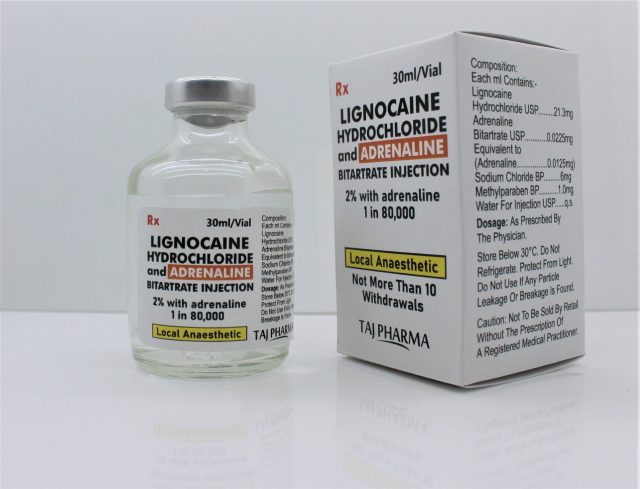
Lignocaine And Adrenaline Injection 10 X 30ML 2% 1/80000Lidayn Injection – 30ml in a transparent glass vial.International formulation with 21.3mg/ml Lignocaine along with anti-oxidants.
How to use:
Intramuscular injection; to be administered slowly10 X 30ML 2% 1/80000
Lidayn Injection – 30ml in a transparent glass vial.
USP:
International formulation with 21.3mg/mli-oxidants.
How to use:
Intramuscular injection; to be administered slowly
LIDAYN LIGNOCAINE & ADRENALINE INJECTION IP 10 X 30ML 2% 1/80000
Lidayn Injection – 30ml in a transparent glass vial.
USP:
International formulation with 21.3mg/ml Lignocaine along with anti-oxidants.
How to use:
Intramuscular injection; to be administered slowly
LIDAYN LIGNOCJECTION IP 10 X 30ML 2% 1/80000
Lidayn Injection – 30ml in a transparent glass vial.
USP:
International formulation with 21.3mg/ml Lignocaine along with anti-oxidants.How to use:
Intramuscular injection; to be administered slowly https://horsemedcare.com/
LIDAYN LIGNOCAN IP 10 X 30ML 2% 1/80000
Lidayn Injection – 30ml in a transparent glass vial.
USP:
International formulation with 21.3mg/ml Lignocaine along with anti-oxidants.
How to use:
Intramuscular injection; to be administered slowly
LIDAYNCTION IP 10 X 30ML 2% 1/80000
Lidayn Injection – 30ml in a transparent glass vial.
USP:
International formulation with 21.3mg/ml Lignxidants.
How to use:
Intramuscular injection; to be administered slowly
LIDAYN LIGNOCAINE & ADRENALINE INJECTION IP 10 X 30ML 2% 1/80000
Lidayn Injection – 30ml in a transparent glass vial.
USP:
International formulation with 21.3mg/ml Lignocaine along with anti-oxidants.
How to use:
Intramuscular injection; to be administered slowly
LIDAYN LIGNOCAINE & ADRENALINE INJECTION IP 10 X 30ML 2% 1/80000
Lidayn Injection – 30ml in a transparent glass vial.
USP:
International formulation with 21.3mg/ml Lignocaine along with anti-oxidants.
How to use:
Intramuscular injection; to be administered slowl

Reviews
There are no reviews yet.